
 Inspiration
An epoxy river table is a big investment — a single slab of hardwood paired with a hand-poured resin river isn’t something you replace on a whim. The good news is that with the right daily habits, an epoxy river table can look showroom-new for decades. The wood and resin just need slightly different care than a regular wood or laminate table, and most of the damage people see comes down to a handful of avoidable habits.
Here’s what actually keeps an epoxy river table in good shape, and what quietly ruins one over time.
Daily Cleaning
Epoxy resin and finished hardwood are both easy to keep clean day to day:
- Wipe spills as they happen with a soft, damp cloth. Epoxy resists staining far better than raw wood, but sitting liquid — especially anything acidic, like wine or citrus — can dull the finish over the wood portion of the table if left too long.
- Use a mild soap and water for general cleaning. Skip anything abrasive; scouring pads or gritty cleaners will scratch the epoxy’s glass-like surface.
- Dry the surface after wiping rather than letting it air-dry, particularly around the seam where wood meets resin.
What Not to Use
A surprising number of common household cleaners will damage an epoxy finish over time:
- Ammonia-based glass cleaners — these can cloud epoxy resin and strip its shine.
- Alcohol-based cleaners — can soften or dull the resin surface with repeated use.
- Furniture polish or oil-based wood cleaners — these are formulated for raw or oiled wood, not sealed epoxy, and can leave a hazy film.
- Anything abrasive — magic erasers, scouring pads, and gritty sponges will leave fine scratches in the resin that catch light and become visible over time.
Warm water, a mild dish soap, and a microfiber cloth handle nearly everything an epoxy river table needs.
Protecting the Wood Side
The resin river holds up differently than the solid wood portion of the table, and the wood is where most long-term care actually matters:
- Use coasters and placemats. Hot mugs, cast iron pans, and condensation rings are the most common source of long-term wood damage on a live edge table.
- Reapply oil or wax periodically if the wood was finished with a penetrating oil rather than a hard lacquer. Most oil-finished tables benefit from a light reapplication every 6–12 months, more often in dry indoor climates where heating systems pull moisture out of the air.
- Control humidity where you can. Solid wood expands and contracts with humidity changes. Big swings — especially between a dry winter and humid summer — are the main reason a table top develops small cracks along the grain over years of use.
Sun Exposure: The One That Surprises People
This is the maintenance issue most new epoxy river table owners don’t know about until it’s already happened: direct, prolonged UV exposure will yellow clear epoxy resin over time. It’s the same reaction that yellows old plastic. A table positioned in direct sunlight for years — especially near a south-facing window — will show a noticeable amber tint in the resin that a table kept out of direct sun won’t.
If your table sits near a window with strong direct sun for part of the day, UV-filtering window film or simply repositioning the table out of the direct beam will prevent most of this. It’s far easier to prevent than to fix.
Fixing Minor Scratches
Light surface scratches in epoxy can often be buffed out with a plastic polish compound (the same type used on boat windshields and headlight lenses) and a soft cloth, working in small circular motions. Deeper scratches or gouges usually need a professional epoxy touch-up, since a DIY resin patch rarely matches the original pour’s clarity and color exactly.
When to Call a Professional
A few situations are worth bringing in the people who built the table rather than attempting a DIY fix:
- Cracks that have gone all the way through the wood slab
- Cloudy or yellowed epoxy across a large area
- Any structural movement in the base or joinery
- Deep gouges in the resin river itself
A Table Built to Last, With the Right Care
A well-made epoxy river table is built to be a generational piece of furniture, not something that needs babying — but a little routine care goes a long way toward keeping the resin clear and the wood grain looking the way it did on day one.
If you’re still shopping for your first piece, Woodify Canada’s marketplace connects you with Canadian makers building epoxy river furniture across dining tables, coffee tables, and boardroom tables. Browse custom epoxy river dining tables, epoxy boardroom and conference tables, or the full live edge collection to find a piece — then treat it right for the next few decades.
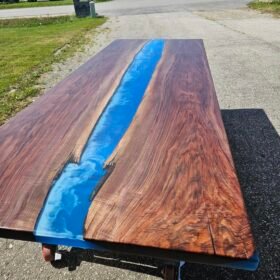 HUGE SALE 9.5ft x 3.5ft Black Walnut Table only $6950
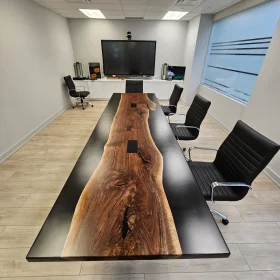 Boardroom / Conference Room Tables
 Browse All