
 Inspiration
Open floating shelves have been a design staple for years, but the material choice is finally catching up to the trend. Instead of painted MDF or thin engineered boards, more homeowners and designers are reaching for something with actual presence on the wall: solid black walnut with a live edge.
It’s a small detail, but it changes an entire room. Here’s why it’s become one of the most requested upgrades in modern interiors — and what to know before you add it to your own space.
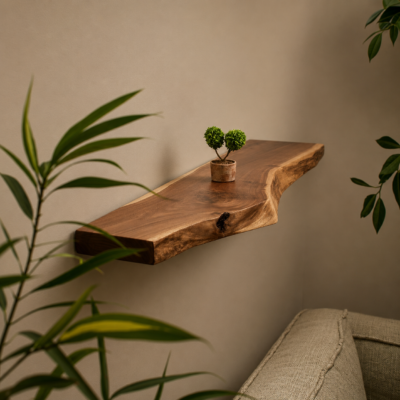
Black Walnut Shelf with High Variance Live Edge
What Makes Black Walnut Different
Black walnut has always been prized in fine furniture for its deep, chocolate-brown tone and tight, consistent grain. But what makes it stand out specifically for shelving is how it ages — walnut doesn’t fade or wash out the way lighter woods can under sunlight; it tends to mellow and deepen in tone over time, which means a shelf installed today only gets richer looking a few years in.
Paired with a live edge — the natural, unmilled contour of the tree itself, knots, curves, and all — a walnut shelf stops looking like a manufactured object and starts looking like a piece of the tree it came from. No two boards are alike, which is exactly the point.
Where It Actually Works Best
Live edge walnut shelving isn’t just for rustic cabins anymore. It’s showing up in:
- Kitchens, as open shelving above counters or a range, where the dark tone contrasts against white or light cabinetry
- Home offices, as a single floating shelf behind a desk for books, plants, or display objects
- Bathrooms, surprisingly — walnut with the right finish holds up well as a vanity ledge or towel shelf
- Living rooms, as a mantel-style shelf above a fireplace or media console
- Commercial spaces, cafes and boutique retail in particular, where one striking natural shelf does more visual work than a wall of matched cabinetry
The common thread: it works best as a statement, not wallpaper. One well-placed live edge shelf usually beats three matching ones.
What to Look For Before You Buy
Not all “live edge” shelving is built the same way, and the difference matters more than it looks in photos:
- Thickness — thin live edge boards (under an inch) tend to look flimsy once mounted; 1.5″ or thicker reads as substantial and holds brackets more securely
- Grain variance — some shelves are cut for a subtle, even edge; others are selected specifically for dramatic curves, knots, and high figure. Know which look you want before you order, since it’s not something you can change after the fact
- Drying and stabilization — solid wood that hasn’t been properly kiln-dried can warp or crack after installation, especially in kitchens and bathrooms with humidity swings. This is the single most common issue with cheaply made live edge pieces
- Mounting hardware — floating brackets vs. exposed industrial pipe brackets change the whole look; decide this alongside the shelf, not after
If you want to see what a high-variance live edge actually looks like before ordering, Riverside Workshop’s black walnut shelf is a good reference point — it’s built specifically to showcase the tree’s more dramatic curves and knots rather than a cleaned-up, uniform edge, and it’s available in a range of lengths depending on the wall you’re working with.
Styling It Once It’s Up
A live edge walnut shelf tends to look best when it isn’t overloaded. A few pairing notes that consistently work:
- Matte black or brass brackets — both read well against the dark tone; avoid brushed nickel, which tends to clash
- Leave visual breathing room — 3–4 objects per shelf, varied in height, rather than a packed row
- Let the wood be the accent — pair with neutral wall colors so the grain does the work instead of competing with a busy palette
The Bottom Line
Live edge black walnut shelving isn’t a trend in the sense of something that’ll look dated in two years — the appeal is that it looks like a natural material aging honestly, which is the opposite of trend-chasing. If you’re weighing it against a standard floating shelf, the real question isn’t whether it’s “in style” right now. It’s whether you want a shelf, or a piece of wood with a shelf’s job to do.
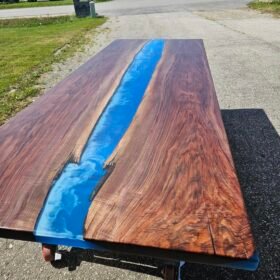 HUGE SALE 9.5ft x 3.5ft Black Walnut Table only $6950
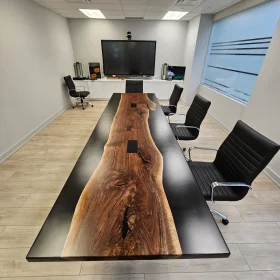 Boardroom / Conference Room Tables
 Browse All